

Monday, April 24, 2023


Wednesday, April 19, 2023

Wednesday, April 12, 2023
The Wather PP Police Pistol - a Little Piece of History

The PP was one of the first commercially successful double action pistols, with an exposed hammer, a single column magazine and a fixed barrel, which acts as the guide rod for the recoil spring. First issued to European Police and sport shooters, they became popular for both concealability and accuracy. During WWII, Walther produced many PP series pistols for the Wehrmacht (the uniformed armed forces of Germany during 1939 to 1945). It also became a popular sidearm for high ranking Nazi officers and party leaders (collectors will find some embellished and marked to denote the party or ministry and even the title of the person).

The PP's were part of a series that included the Walther PP, PPK (appearing in 1931), PPK/S and later, PPK.E. The PPK, with it's shorter grip and barrel is much more well known to people who aren't necessarily firearm collectors, being the pistol (a 7.65mm/.32 ACP) that was James Bond's signature guns in many of the films based on novels of Ian Fleming, who created the fictional character. That choice of a weapon had an effect on not only its popularity but its recognition
The newer series are manufactured in Germany or the US, but this pistol is of decided German origin, 1945, and chambered in .32, the original chamber of the piece. Before ending up in the safe at the Range, it belonged to a long-retired Midwest Police Officer. How he ended up with it, I did not know, as his family had little history, but many Walthers were brought back as trophies by returning GI's after WWII.

Handling. It's pretty much the same as most conventional DA/SA semiautomatic pistols, with a slide-mounted decocking system that's been emulated on many other pistols. The only other firearm in the series I've handled is the .380, which is more common. I think the sights on the .32 are a little bit better regulated for point of aim equals point of impact than the .380 and the double action was a bit smoother. But outside of that and barrel length, I didn't see much cosmetic difference.

The .32 also was also a little less "snappy" which any of you who've fired smaller firearms know what I mean.
Sights - fixed, about as simple as it gets, plain black front sight with the "U" notch in the rear.

After clearing your firearm, you can use a pencil between the trigger guard and the frame (the equivalent of a slide catch on a Sig) which takes the block out of the way so the slide can then be moved forward ("Gunsmithing with the No. 2 Pencil"- Firearm Bestseller - FAIL).


The grips come off easily to access the internals and overall cleaning is pretty standard. If you've field stripped any other PP model or most Sig's it's very intuitive.
Concealed carry. It is small, the barrel a bit less than 4 inches and slender so it's easy to conceal. That being said, I'd certainly want something more than .32 if meeting up with someone intent on my serious harm or death. But in the pocket, while in the garage, it would make a nice backup gun, chambered in something such as PMC 71-gr FMJ or Hornady 60-gr XTP. The FMJ does have decent penetration but some folks prefer a more expanding bullet, which would result in a wider wound channel. Personally, I'd use the XTP. Even if it's not as aggressive in its expansion, it would likely give you better "bad guy penetration" than the FMJ and it's a load that's been reliable for me.

But don't be fooled by light and pretty. This gun has sharp pointy teeth. The slide is mounted low enough that it is VERY easy to get your shooty hand bitten by the edge of the slide. My hands, as far as palm size and finger length, are about the same as most guys my height. Once when the moon was full and I was bitten by the first of the small pocket pistols, I was cursed with continually getting my hands nipped, even adjusting the way I held on to it. The Walther PP is no exception.You may go unscathed, but if you have big hands, considered your self forewarned. Keep off the moors, stick to the roads.

Wednesday, March 29, 2023
Dog Days of Winter

The dog elevator - as Lorelei can't do steps with her hip issues.


Enjoy it Larelei - this may be our last snow for the year.


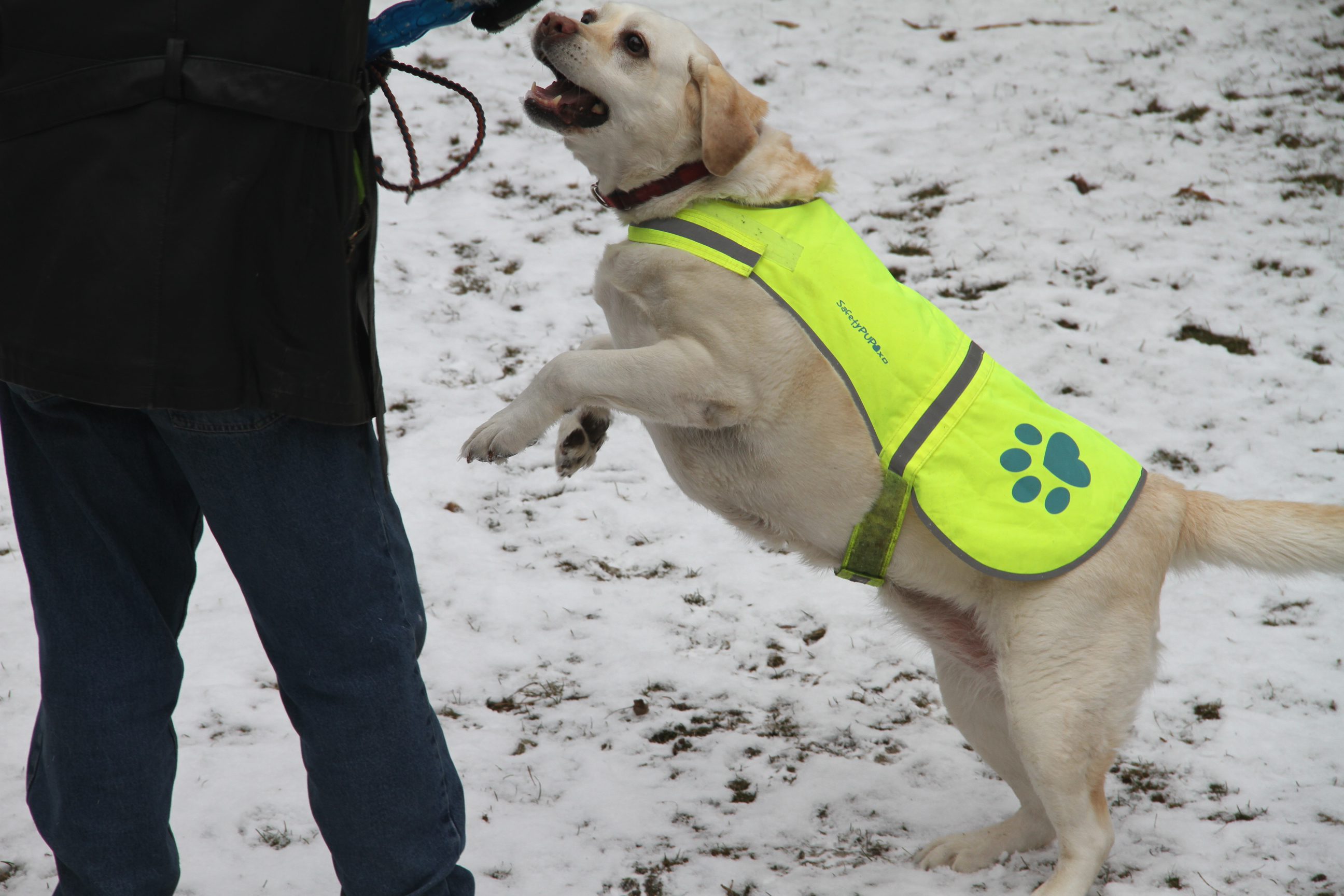


Time for breakfast Dad!


Friday, March 17, 2023





Wednesday, March 8, 2023
On Chance

Luck is what happens when preparation meets opportunity.
— Seneca, 4 AD-65 AD, Roman philosopher
There are three attributes for which I am grateful to Fortune: that I was born, first, human and not animal; second, man and not woman; and third, Greek and not barbarian.
— Thales of Miletus, 643-548 BC, Ancient Greek philosopher
If a man look sharply and attentively, he shall see Fortune; for though she is blind, she is not invisible.
— Francis Bacon, 1561-1626, English philosopher
Chance is perhaps the pseudonym of God when He did not want to sign.
— Théophile Gautier, 1811-1872, French poet & writer
God doesn't play dice with the world.
— Albert Einstein, 1879-1955, German-Jewish physicist
I find that the harder I work, the more luck I seem to have.
— Thomas Jefferson, 1749-1826, American President [1801-1809]
Shallow men believe in luck, believe in circumstances...Strong men believe in cause and effect.
— Ralph Waldo Emerson, 1803-1884, American philosopher
Chiefly the mold of a man's fortune is in his own hands.
— Francis Bacon, 1561-1626, English philosopher
People who strongly want something are almost always well served by chance.
— Honoré de Balzac, 1799-1850, French writer
There is no such thing as luck; there is only adequate or inadequate preparation to cope with a statistical universe.
— Robert Heinlein, 1907-1988, American sci-fi writer
Fortune favors the bold.
Audentes fortuna iuvat.
— Virgil, 70-19 BC, Roman poet
Yu've gotta ask yourself one question: “Do I feel lucky? Well, do ya, punk?"
— Dirty Harry (1971)
Tuesday, February 28, 2023
Learning Curves

My big brother taught me how to drive, but what I remember most was his teaching me how to drive in the snow. We'd take the little VW Bug I had over to the empty high school parking lot where there were no people or light poles. There I learned all about braking, sliding, skidding, and the physics of stopping with a stalemate of snow and rubber. He'd teach me to recognize a skid, how to immediately pick out a distant visual target and keep my eyes focused on that target, while I steered out of it as he issued commands to keep me pointed in the right direction like a border collie directs cattle, his tone fast and quick and light, words darting in and out of my field of vision.

I put his teachings to the test on hill and valley, letting that little car run like it was a little horse, leaning forward with a yell as we got into fourth gear as if by doing so I could somehow outpace it as we both fled the sheer inertia of earth. That car and I ran free of the fence lines, free of ourselves, racing with a quality of movement in our motion totally separate from the imaginary pound of hooves or the whoop of joy as I discovered flight in four-wheeled form. I put mile after mile on that car, the land stretching out until only darkness stopped me, the heavy scent of pines laying across the road for my trusty stead to disperse as if the scent were tangled skeins of smoke.
I also knew when to rein it in, slowing it down on slippery turns, downshifting through those sharp corners that are judgment and sentence and execution. I knew to stay behind the clusters of bright shiny cars, and artificial flowers to which the restless bees of the law would be drawn. I also knew when to drive away, coasting out of a driveway when I arrived at a high school crush's to find him with someone else, that long slow tearing that leaves no scar of the tire, but only an internal lament that is the tearing of raw silk.

When that happens you don't even know what the cause is - speed, black ice, or the force of mother nature that's as distant to the indictment as God. All you know is for a moment, your useless hands were clasped tight to a useless steering wheel, and by only muscle memory, you try and keep the pointy end forward, the headlights revealing not your safety, but the now empty roads' abiding, unmitigable denial. When you finally stop, all you can hear is your heart and the tick of a watch, that curved turmoil of faltering light and shadow in mathematical miniature, reminding you how close you came to running out of time.

I hear my brother's voice in my head on these drives, echoes of the phone calls we made to each other there in his last days. Sometimes he just wanted to vent a bit, everything he'd worked for at risk, due to decisions made by others for political gain, his defense job gone, his military retirement cut, his health and the insurance that guarded it, turned into a house of cards foundationed on an abyss. But I let him talk without interruption, for one thing he taught me, other than slips and skids, was that there are things we should never stop refusing to accept, be it injustice and dishonor and outrage, not for cash for a better car, not for accolades, not for anything, there are things one must continue to be outraged over, to fight for, hands firmly on the wheel of where you want your life to go. His words are in my ears to this day, you will have regrets but never let yourself be shamed.

"focus on the target, you can do this. . ."
Wednesday, February 22, 2023
Route 66

I have more "old" weapons than new. Some of it is simply the comfort of those things that have been proven reliable. Then there is simply the sheer love I have for that which is history, of the acts of courage that defined a person's freedom, of the mechanical workings of objects which support self-sufficiency and strength. Planes, trains, steam engines, old tools, and yes, the gun. There's an attraction to old tools and old machines, the human values they represent. Nothing that withstands history gets built without the brilliance of design, a laboring effort, and the dreams of man. Some say a gun is a killing instrument. Man is a killing instrument. A gun is only a tool, from which we have the pure mechanical force which can keep one alive or take a life. As a tool, it is as weak or as strong as he or she who hold it, as good or as bad as the collective soul that keeps it in working order. The guns I own are defenders of good, soldier's weapons, officer's weapons, and my weapons.
The Smith and Wesson 66 was born in 1970 as a stainless, and therefore the more corrosion-resistant, version of the already-popular Model 19 Combat Magnum. That particular firearm was produced from 1957 (first model number stampings) to November 1999
The Model 19 was produced in blued carbon steel or nickel-plated steel with wood or rubber combat grips, an adjustable rear sight, a semi-target hammer (wide hammer spur with good checkering), serrated combat-type trigger, and was available in 2.5" (3" particular to the Model 66 being rarer), 4", or 6-inch barrel lengths. The weights are 30.5 ounces, 36 ounces, and 39 ounces, respectively. The 2.5- and 3-inch barrel versions had round butts, while the others had square butts. I'm not a big fan of the Spongebob Squarepants gun butt from a "feel" standpoint, but they've got a nice crisp look to them.
The Model 19 was produced on Smith and Wesson K-frame platform (S and W refers to their frame sizes by letter) and was chambered for a .357 Magnum. The K-frame is somewhat smaller and lighter than the original N-frame .357, usually known as the S&W Model 27. The Smith and Wesson no longer makes the K-Frame, replacing them with the heavier L-Frame models, which include models 619, 620, and the model 686. The L Frames are a bit heavier, and for me, don't point as naturally as the 66.

Stainless steel offers many advantages in a gun, outside of just "SHINY", including the fact that you can polish out minor imperfections without removing bluing. Additionally, minor rub wear doesn't affect the gun's finish appreciably as it would do to a blued finish.
The Model 66 is a double-action, six-shot revolver, retaining most of the characteristics of the 19. The one I have fired the most, like the 19, had a target trigger (featuring vertical grooves), target hammer (wide hammer spur with good checkering), fixed point sight, and adjustable rear sight.
If you are on the lookout for one of your own, the first issued ones are easily identifiable with the stainless steel rear sight, pin barrel, serrated stainless trigger, recessed cylinder, and the “mod 66” stamped on the frame. If you think you see one there just waiting to be purchased somewhere, it should have stamped on the left side of the gun the words "SMITH & WESSON" along the barrel, with the trademark S&W logo on the frame below the cylinder latch. If you have a S&W you would like to know more about you can send a picture and a form from the S&W Website to the Historian, Mr. Roy G. Jinks.

The gun remained virtually unchanged until 1977 when the 66-1 model came out which changed the gas ring from the yoke to the cylinder. The later 66-3 designation indicates design tweaks to delay development of cylinder end-shake as well as the elimination of the recessed cylinder. Future changes through the 70s and 80s slightly lengthened the cylinder and installed a new yoke retention system/radius stud package/hammer nose bushing/floating hand.
In 1994, with the 66-4 model, the rear sight leaf and drill, extractor, and tape frame were slightly changed and Hogue grips were introduced. In 1998 there was a change in frame design and in 2002, with model 66-6, it introduced the internal lock. I believe the last one was manufactured in 2004 or 2005.

This firearm was a favorite of many law enforcement agencies in the mid to late 70s, some even carrying it into the late 90s (or later than that, if the rumors are true). The demise of the K-Frame (and with it, the 66) came as owners started to get a hankering for the lighter and faster 125gr .357 Magnum load as an alternate to the 158gr lead projectile that was the bulk of the ammo available in the early production years. The forcing cone on the model 19 is not as thick at the very bottom. The lighter bullets at very high velocity using very hot burning powders, apparently subjected the forcing cone to what I guess, in layman's terms, you could call metal fatigue, with resultant cracking of the forcing cone. Smith and Wesson has made the recommendation to not use the 125gr loads though I've not heard of any cone cracking issues with the 66 Model. Some 66 owners recommend alternating the .38 with the .357 in the 66, others have shot nothing but 158gr for thousands of rounds and still have a nice, tight weapon.
The .357 Magnum is a story in and of itself, being probably the oldest handgun "magnum" cartridge. Its collaborative development started in the '30s, in direct response to Colt's .38 Super Automatic. At the time, the .38 Super was the only American pistol cartridge capable of defeating automobile cover and the early ballistic vests that were just beginning to emerge in the post-World War I "Gangster Era". ("Gangster" not to be confused with "Gangsta" as the future felons of the 1930s had the common sense not to wear their pants so low the waist is about knee level. It would have been hard to be a successful bootlegger in pants a clown wouldn't wear because they were too undignified.


Tests at the time revealed that those early ballistic vests defeated any handgun cartridge traveling at less than about 1000 ft/s. Colt's .38 Super Automatic just edged over that velocity and was able to penetrate car doors and vests that bootleggers and gangsters were employing as cover. Smith and Wesson's Dan Wesson agreed to produce a new revolver that would handle "high intensity" .38 Special loads, but only if Winchester would develop a new cartridge.
Though .38 and .357 would seem to be different-diameter chamberings, they are in fact dimensionally identical. 0.357 inch is the true bullet diameter of the .38 Special cartridge. The .38 Special nomenclature relates to the previous use of heeled bullets (such as the .38 Long Colt), which were the same diameter as the case. Thus, the only external difference in the two cartridges is a slight difference in length (the .357 having a .125 inch longer case). Those first revolvers referred to as the Magnum Models were completed by Smith and Wesson in April of 1935.
Retired Assistant Chief Patrol Inspector of the U.S. Border Patrol, and noted firearms and shooting skills writer, Bill Jordan, consulted with Smith and Wesson on the design and characteristics of the Model 19. His idea? The Peace Officer's perfect dream. A sidearm with a heavy barreled four-inch K frame .357 Magnum with a shrouded barrel like the big N frame .357 and adjustable sights. After months and months of experimenting with improved strength steels and the latest in special heat treat processes, the result was the .357 "Combat Magnum" firearm (later designated as the Model 19). The first, serial-number K260,000 was presented to Jordan on November 15, 1955, and a legend was born.
So how does this "old legend" shoot? Flawlessly. With the weight of the K frame and the barrel, it points more naturally than a German Short-Haired Pointer. Never having shot the weapon before, I still got a nice tight group, even with the bigger round, once I learned where it shoots with the sight picture. I can see why it was so popular with law enforcement.
 The trigger was one of the smoothest I've tried, with no stacking. The double tap didn't require me to do the "Dance of the Seven Veils" trying to get my hand back in position from recoil. Single-hand holding with double-action pulls was not hard at all with this piece. It was accurate, it was tight, it felt really good in my hand (no ow!!! factor with multiple rounds and tender skin) and even better, it made a nice big HOLE right where I wanted it to go.
Now for the ammo question. Generally speaking, any .357 Magnum revolver will safely handle any factory 38 Special ammo (but do NOT attempt to load or fire .357 in your .38 special - BAD dog. . BAD!). The Model 66 should safely shoot both 357 Magnum and 38 Special ammo, including extra-hot 38 ammunition known as "plus-p" (+P) and "plus-p-plus" (+P+). Of course, check with your manufacturer if any doubt as to what rounds are the best to put in your newly acquired firearm. I've not fired it enough to recommend any particular type, so will leave it up to my readers to pass that information along.
The double action (DA) was not quick as smooth as the Colt Python, but that's like saying Vanilla Hagan Daz ice cream is not quite as rich and tasty as the Coffee flavored. The feel was consistent throughout the pull, even more so than the Python, which to me has a noticeable change in the pull weight partway through the DA trigger travel.
 You may have to hunt around to find one. But there are not a ton of good condition, clean ones available. If you have to chance to buy or borrow one, you probably won't regret it. The first one I shot, and one of those pictured here, belongs to a partner in squirrellville. It's what he carries when off duty and it's a beautiful piece.
The leverage is excellent for the size of the handgun. I've got really long fingers and a good-sized hand. However, I think the hands of most women and men who are not built like Grizzly bears, would find a good grip with this. The trigger finger reaches the trigger with a minimum of effort, and the front sight stays on target if the target isn't a Bobble Head.
Cleaning is a snap. Remove the cylinder and clean with a little Break-Free. There's no sideplate removal or detail stripping that's required on other types of guns you're used to cleaning. Even if you dunk the thing in salt water, it's just a field strip, clean with Break-Free CLP, rinse in hot water, spray with more CLP, wipe down, and air dry.
Why salt water you ask? Seal Team Six used the Model M66 until the M686 came along, as did other Teams. The reasoning was that if lubricants washed off the weapon during the swim to the. . uh. . . objective, a revolver was more likely to function than a semi-auto. Blued finishes don't hold up to such exposure. Parkerized, anodized and stainless finishes do quite well. There was no special ammunition used, as the Winchester Silver Tips of the time were considered reasonably waterproof.

It's a wee bit big to be totally indiscernible, but with the right holster, it will make a good concealed piece for someone that's not hobbit sized. I know I was sold the first time I got my hands on it. It's light for what it packs and comes on target easily with a high hit probability. It's a legend, a true sculpture in stainless. Like my partner, I'd trust my life with it, and that says a lot.
Subscribe to:
Posts (Atom)