Sunday, July 28, 2024

Sunday Canon Fodder - Hit or Miss

With a young rescue dog in the house, quiet time to write is at a premium - so sometimes it's best to just admit defeat and let your afternoon "go to the dogs".

Today's training with Partner in Grime and Sunny D. (dog) was catching a ball from a prone position.  Though she's 14 months old she lived in a crate for 10 months so she's a bit behind in social skills and training but is quite smart and eager to please.  

Not sure how much "we" learned, but it was fun.

Wait!  I wasn't ready!
Did I tell you I wasn't ready?

Score!
It went THAT way!

Sunny grabs the ball - Take # 37.
Poetry in motion!

Tuesday, July 23, 2024

Branching Out


You all remember the dog elevator?  It was built with a winch motor and some lumber when Lorelei Lab couldn't do the stairs any longer. 

That thing behind it is the Juniper Bush from hell.

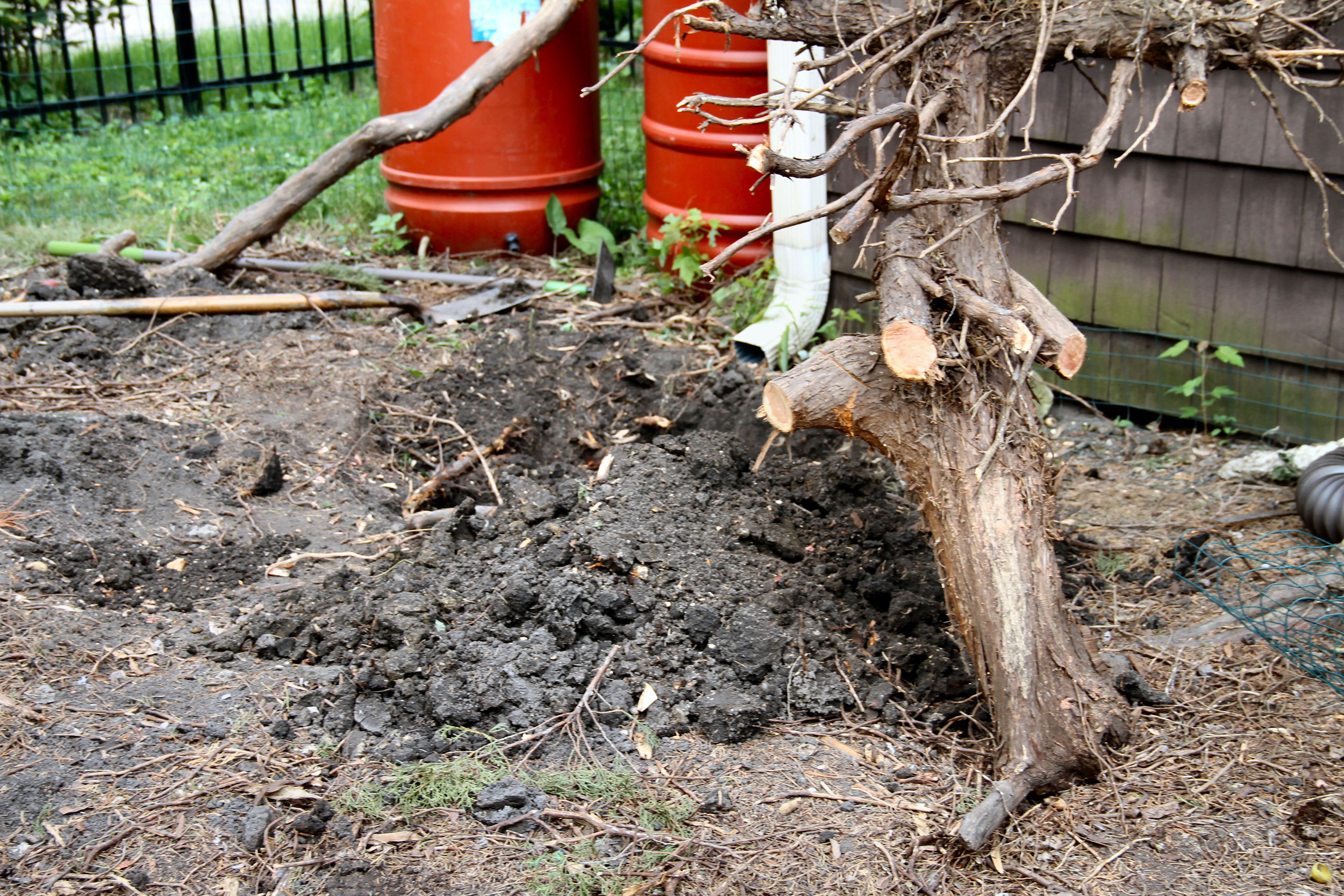
Despite whacking at it regularly, it just kept growing and taking over much of the yard. Juniper is also toxic to dogs and although Barkley, Abby, and Lorelei ignored it, Sunny wants to eat it like it's a bag of Doritos.  So out it comes.


So Partner in Grime decided to slay it, once and for all.  So after I got done with a week of work in DC (the meeting that would not die) it started. It took a couple of evenings after work , most of one weekend and numerous sandwiches, but it's done.  

We didn't find a job of prohibition-era moonshine like we did when the front porch was rebuilt, but there was a maple tree trying its best to grow in there and a bunch of catnip (which explains the stoned long-hair car we'd find lounging on the dog elevator ramp, totally obvious to the fact dogs live here),.


The brush pile is as tall as my truck. 

Now to get rid of the remains.  Maybe it just needs the right sign.


Out of fireworks? - This will light up like the 4th with extra pops and crackling (Firemen not included)
Must rehome - Emotional Support Brush Pile

Free Free-Range Kindling

DIY Viking Funeral - just add boat and dead Viking
$50 - Natural Gin Flavoring.
Failing that - we'll call the arborists who took out our 2 dead spruce trees and see if they want some mulch material when they're in the neighborhood.


Thursday, July 11, 2024

The Whitetail Girls of Summer

He shows up in a wide-open field, just looking for love and the whitetail equivalent of a "sandwich".
A little bit later, as the sun fades, the ladies show up.

I will not point out to my readership that the ladies are all aware of a "threat" and poised to run while Mr. Buck continues eating a little supper while humming "Get Down Tonight".
 
You all stay safe out there.

Saturday, July 6, 2024

The Bicycle

As a child, I could never figure out why we got out of school in June. In June, it was still chilly on some mornings, and rainy on others. Then, to add insult to injury, we had to go back the first part of September when the air was a fine golden wine that invited laughter and the shedding of long pants and shirts, as we got into trouble as only the innocent can down at the swimming hole.

 But like kids do, we’d take in every secondswimming, jumping from a rope swing into clear waters, ripping through the woods seeking things we thought were ours alone to discover. An old scrape of an antler, the footprint of a stealth fox, the glimmer of red the only sign that she had passed.


It was a rare day in summer we’d stay indoors, and most of that time outdoors I was on my bike. My toys were beloved, but I loved my bike. However, I wanted a new one, specifically a ten-speed, when all the cool kids were getting $100 Schwinn bicycles. Dad’s income was modest, providing simply a roof over our head, seed for the garden, and a steer to butcher each year; plus, tithing for the church, and gas to go visit my aunt and uncle’s ranch or a cabin at the coast for a few weeks each summer. We weren’t lacking in a good, sound, loving home and physical comfort, but a $100 bike back in the late ’60s was out of the question.

 I was crushed, praying for what I wanted, not needed, as some people did, as if God was some sort of celestial room service. Yes, I prayed for a shiny yellow Schwinn. It was not to be, and knowing how hard my parents worked I tried not to let my disappointment show.


But I’d watch the other kids from up the ridge in the big houses of cedar and glass, whizzing down the hills on their brand-new bikes. It wasn’t jealousy so much as it was like looking through the telescope, we’d watch the stars with, the lens tempting us with places we wished to go, places our senses could see but which our limitations could not afford.

 I didn’t whine, I didn’t beg. That may have worked with the whole “get a dog” thing, but the dog was from the pound while a bicycle cost money. I rode the heck out of my old one-speed bike, hoping that if one day it would sort of spontaneously combust from that bump catapulting me downhill toward the grade school at Warp Factor 4, my parents would be forced to buy me a new one. But it didn't happenneither the combustion, Warp Factor 4, nor the new bike.

 Then, one hot late summer day Dad got up early. He normally rose before the sun, but this day he was up early. When he came home, he bustled something covered with a tarp into the garage and told us kindly but firmly to stay out. We figured it was woodworking stuff, a hobby he loved; and that was that.

Then we headed out into the fields, the kids from the hill where the big houses were on their new bikes, while I rode the dilapidated embarrassment of a little girl’s bike complete with the hated basket. I wanted a big kid’s bike, a cool bike. I was almost ten! But my parents knew better than to give us everything we wanted when we asked for it, so we would not grow up into that sense of entitlement that can only lead to disasteras individuals, or as a nation.

 But cool bike or not, I loved to ride; and we’d race the wind, abandoned to the musical cadence of foot, and spoke and pavement. The streets attested to the power of this freedom, kids racing up and down with war cries and laughter. Seeking out friends, seeking out adventures. Especially if it took us out into the woods that surrounded our little mountain town.

 The bikes got us to this place, but it was always ours. Clear blue streams gurgling with trout, flotillas of the first yellow leaves rushing on and gathering in clusters against the rocks. We’d race down the hills on our bikes, shouting over the galloping hooves of our imaginary steeds. A hawk dove from the sky; the wilderness was his home, but it was ours to claim.

 We’d drink from a clear mountain stream if we got thirsty, and we ripped more than one set of knees out of a pair of jeans which our mothers would patch, not replace. Our moms were all at home doing what moms secretly did in the day. My own, having been a sheriff in an adjoining big county, was high up on the Cool Chart, as was my dad; but we never felt tethered by them, only protected. They trusted us to travel in pairs, to wander in by dinner, and to come home if anyone accidentally lost a limb or caught a really big trout.

They seemed to understand that we needed to burn off the energy of youth and growth. They knew who we were with and likely where we would be; but they allowed us to work through the precursors of teen hormones, exploring, or building a raft, not cooped up inside. They had grown up with this generation of play, and so would we.

 Our toy soldiers clashed and died while we, as a general, or a spy, ran between the thick green trees until twilight rolled over us in clean, warm waves. Then with only the impending darkness and an empty belly, we were called home.

 We’d gather our wounded to us: the GI Joe who lost his arm in a tragic lumberjack accident; the precision plastic firearm that only dribbled water now; and field nurse Barbie who never had the appropriate outfit. Our next-door neighbor boy Craig with his skinned knee and my brother Allen with his sunburn retreated to their bikes, which they rode together as best friends for the next fifty years.

 School was almost upon us, and every last bit of adventure was squeezed from the day before we arrived back home. We crept into the pantry, grabbing a Hostess Sno Ball from the cupboard, and then rushed out to see what Dad was doing, cheeks stuffed with chocolate and marshmallow-like wild-eyed squirrels. There was my dad. Not angry that we were dirty, with torn pants, and having a snack before Mom’s homemade supper, but smiling. Beaming. And there behind him was a ten-speed bicycle. Not a Schwinn. But a Huffy, repaired and freshly painted in my favorite color, with new decals and new tape on the handlebars.


Would you like it?” he asked me with the hushed hesitation of that question where you knew before you asked what the answer would be.

 At first, I was astonished, not believing this was happening. Then the astonishment faded away, slowly at first, then evaporating quickly; and quietly, like a piece of iron being forged so hot that it glows, a glow sparked and then ebbed to the contentment of its final form, what it was destined to be.

Dad had gotten up at o’dark hundred hours to drive to the city where their police department was auctioning off unclaimed lost or stolen bikes to raise money for the community. He got up when some folks were going to bed and waited in the cold for hours to bid on this bike, which he got for $15, then repaired, painted, and cleaned up. It wasn’t new, but it gleamed with promise; the handlebars shone with invitation; and it was fast. Lord, it was fast.

 My bike now is mostly a four-wheel-drive truck. I have one at work as well, to get to places people never want to go. The woods are still my second home, be it play or sometimes work, quiet bluffs and valleys that hide their dead. I may still come home dirty, and it’s a frantic life some days; but being a grown-up doesn’t mean we have to grow up, for we still wish for the same comforts and joys we experienced as children.

With my work today done, I head on north toward home. On the way, I take a side trip through a park and wildlife refuge; I roll down the window, feeling the cold air on my face as if riding my beloved bike. Then, from the woods as the light seeps from the sky, a form off in the distance. I slow and then stop in wonder. A large whitetail deer rushes from the trees; antlers held high, splashing over dappled current, then disappears without sound. His size and form leaving goosebumps on my skin as if the departure of his presence blew hot and cold on me.

As I sit and watch him rush away, I wonder where that old bike of mine ended up. Probably handed down to a niece or nephew, though I couldn't recall. But I will always remember the look on Dad’s face when he wheeled it over to me and the feeling in me when I rode it for the first time, flying down our rural roada fighter pilot of wheels and gears, my big brother riding close by as wingman.

 Soon, I think I need to go out to the garage. There is a bike there, the mountain variety, that’s been harnessed too long. The sun is out, the roads are dry. If I look down, I can see my face reflected in the polished handlebarsthe face of a fighter, the scribe of rigid bone and the folly of men, overlaid with the wondrous childlike glee of unbound speed that knows not yet fate nor death.

 I’m going to forget what the neighbors will think or how sore I might be later. I’m going to climb up on that bike as soon as I can and put that wind back in my wheels, the shadow of my wingman always behind me.  - Brigid


Wednesday, July 3, 2024

Sounds of the Neighborhood

The sounds of a neighborhood vary from day to day.  As I write this, it is early.  I don't wake to the neighbor's car leaving for work, a large stand of trees between this place and hers.  I wake to the alarm clock, warm a cardamom roll as the coffee brews, then sit down in the office to contemplate the day after Partner leaves for his job in the city.

I'm surprised at how quiet it is outside; even the Chicago traffic is hushed except for the wail of a police siren off in the distance.  The ground is dry from the recent heat, and the houses stare silently forward, not acknowledging anything that exists in their peripheral vision. The morning light falls upon their steps without sound.  That lack of sound does not seem odd; it is simply that unique time before dawn. 
By afternoon, the neighborhood takes on a whole other depth of sound.  There is the bright, disorderly cry of lawnmowers firing up, the small tidy yards of an older neighborhood, not taking all day to mow, but the precision of their care reflects on the owner's pride in their home.  There are no homeowners association rules, and one neighbor's bright purple door stands out at attention, but with the colorful flowers that normally adorn the front and the deep rosy hue of the brick, it suits the house.  

There are a couple of kids on bikes, zooming up and down the sidewalks as their dog barks for their return off in the distance.  In the distance, the sound of church bells, there in the season of brides, paced faithfully and serenely, the sounds of the bells like shafts of light among the soft green leaves, yellow butterflies flicking on the grass like flecks of sun.
The sounds continue into the evening: a summer shower off the lake releasing the scent of flowers into the damp air, crickets sawing away in the grass with a sound you can almost feel as a tickle on the skin, the wave of a neighbor as they take in the paper, the clink of a couple of glasses of iced tea, there in the small traveling island of silence that follows us to the front porch.  On those evenings, we may smile at the sound of the ice cream truck or enjoy the quieting of traffic as the wind carries on it the undreamt subtleties of longing for simpler times. 
There is no formal neighborhood watch here, but we do.  We notice when the newspapers pile up at someone's house and check to ensure they are OK.  We watch out for one another. We note the strange car parked on the street, a teenage boy just stopping to visit with the pretty teenage girl down the road.

We know who has had a new child by the toys that sprout in the yard, like colorful flowers, and we note when a house grows silent, a sign goes up for a quick sale, and the owner has passed away. Time consumes not just courage but muscle and bone until nothing is left but a frail form draped in a white sheet, like a piece of furniture unused. We didn't notice the exact time of leaving, but we can't help but speak of the remains.
The house behind us had been silent for a long time.  It's a tall, well-kept place, but with no bathroom on the main floor and wiring that has seen more than one great War, it's not going to sell quickly.  But it was being maintained, other neighbors tending to the yard as the realtor tended to the inside, as we watched for the day a moving truck came in, and bread was baked to take over to welcome the new neighbors in a house that will once again, live and laugh.

From the floor in my little office comes a rumble, a growl.  There is no one on the street, no person walking past.  Yet four minutes later, the UPS truck arrives; the dog can hear it even as it makes its turn from the main road onto this little side street, a canine's super hearing that can detect her arch-enemy, the UPS truck, or a crumb-dropping in the kitchen.  She barks ferociously at the driver, who, through the glass window, simply smiles, knowing that the bark is a juvenile Lab with no will to bite. I open the door for the box, a rush of warm air coming in, the front room now smelling of trees, as it goes silent again, the dog turning around twice on the floor before drifting off to sleep again.
A bird blows onto the sill, like a bright scrap of paper, his heart pumping in his throat faster than any pulse.  He looks into the house, then away, then into the glass again, as if listening, only to dart away as the clock chimes on the hour, then ceases.  The chime fills the whole house.  Perhaps it's just sound, or perhaps it's all time, grievance, and grief, manifesting as sound for just one instant, as planets and gears align. It's a moment wherein one bird believes he is eternal, and in that instant, perhaps he is. Only when that sound stops does time come to life; by then, he is gone.   

The only sound now was that of breath and the tick of that old clock.  I don't deliberately listen to it, the ticks seemingly beyond the realm of hearing, then in a moment, with that one tick your ears respond to, you are acutely aware of the long diminishing train of time you did not hear.  How many ticks are in this house in a hundred years?  How many after I am long gone?  Yet, I feel the presence of others who have lived here, for they perhaps aren't truly dead but simply were worn down by the minute clicking of small gears. The echo of those who sat in this room does not disturb me; they are part of this house; the sound of wood, the creak of murmuring bones, and the air that taps on ancient glass speak of deep winds that witnessed more than time.
I had planned on another country home, but my heart took me here, this quiet village in the shadow of a big city, an old house I fell in love with the first time I entered it.   It has sights and sounds that I would have missed out on 100 acres; it has noise and neighbors, and a number of reasons not close, but out there, that means a gun safe buried deep within a wall.  But I'm a short drive to many friends, a walk to a little Polish bakery and a family-owned coffee shop, the cheery "hello!" as neighbors spot a familiar face coming in for a cup of coffee and time with a book.  On the return walk home, the windows light up like sunshine as I stomp my shadow into the steps, happy to be home.

At the end of the workday, I take a quick walk before dinner.  As the neighborhood ticks outside, a slow and steady beat comes the sound of the trains, the tracks a quarter mile away, carrying a sound on the air that is as comforting as childhood.  I love the sight of them, the sounds they make as they rush towards the horizon, the sounds as they slow for a crossing area, as if conscious of the danger and the passage of time itself.  I watch the movement that is static serenity and labored exhaust, a click, click as it moves away, through eternal trees, faded to thick sky, the train displacing air.  What is the formula for the displacement of air?  Or was it only in water that Archimedes of Syracuse calculated human displacement?  I put my hand on my hip out of habit.  Reductio ad absurdum is the absurdity of human logic, where a two-pound piece of forged steel on a hip weighs more than the form carrying it.

Shadows lengthening, I hurry on back to the house. The tick of my watch and the sound of the train fade away as if running through another place, someplace far from where this life ended up. I approach the little bungalow, a sheen of a brief rain shower on the porch, the lattice by the porch, the front guard of circumstance anointed by summer flowerings.

I ascend the stairs, the air smelling of trees, clutching some old keys to the house; there on a little ring with a medallion with a train etched upon it. My hand holds it tight, that small object being more than keys, but a symbol of all those small things that anchor us to our heart's home. In the growing dark, I don't really see it, but I feel it, there in my hands, clutching those keys to life in a small village within a huge city, a life unexpected but as welcoming as home. 
I release them at last, as the door opens and I fall inward, the coolness of the house pulling me out of the heat and the noise of which I had not been aware until the moment I passed from it. There is no neighborhood noise, no wind, only the sign of the house as the door closes behind me.  I catch a fleeting glimpse of myself in the mirror as I move away into the coolness inside, the sound, tick, tick, tick, breath that breathes life back into this old house. - Brigid